SCAG’s Go Human campaign, with support from the California Office of Traffic Safety, has launched the Community Streets Mini-Grants Program (Mini-Grants). Now in its third year of funding community-driven traffic safety projects, the Mini-Grants Program will provide up to $10,000 in project support to community-based organizations, nonprofits, and social enterprises.
|
On March 12-14, the City of Wildomar, with Go Human, demonstrated walking, biking, and rolling improvements at City Hall. Over 100 residents explored street treatments intended to make active transportation safer and more enjoyable throughout the city. Staff at Go Active Wildomar collected feedback on potential bicycle and pedestrian improvements under consideration as part of the Wildomar Mobility Plan.
|
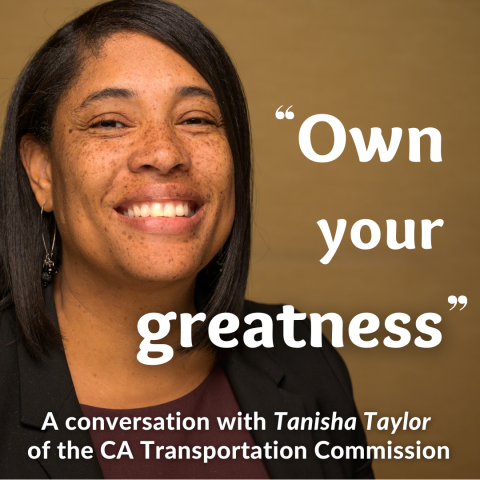
In celebration of Women’s History Month, we had the honor of speaking with one woman who is making history in the transportation field: Tanisha Taylor, Chief Deputy Director of the California Transportation Commission. Tanisha’s vital work in transportation affects everything from air quality to sustainable housing standards. For over 15 years, she has positively shaped communities in California. In the interview below, she tells us about her journey, her identity, and her work.
|
The Go Human campaign is committed to uplifting and amplifying the contributions of Black communities. To celebrate Black voices, joy, advocacy, power, and creativity, we would like to share the following content and resources from leaders, organizations, and movements.
|
SCAG’s Go Human campaign is welcoming 2021 with renewed commitments to equity, mobility, and transportation safety with the adoption of the Toward Zero Deaths resolution by the Regional Council on Feb. 4, 2021.
|
As 2020 comes to a close, Go Human hopes to continue facilitate helpful resources during these challenging times. With the goal of supporting communities during the ongoing pandemic, Go Human partnered with community members, nonprofit organizations, cities, and local agencies throughout the region to create safer and healthier places through education, advocacy, resource sharing and projects.
|
The Go Human team is pleased to announce that the California Office of Traffic Safety (OTS) has awarded SCAG $1.25 million in grant funding to continue the Go Human program. This grant will fund continued Go Human activities through September 2021, enabling the program to serve a greater role in recovery and resiliency efforts in response to the pandemic, especially for the people most impacted. With this funding, our partners across the region can look forward to:
|
At SCAG, we know that traffic safety remains a critical issue for our region. On average, 1,500 people are killed, 5,200 are seriously injured, and 136,000 are injured in traffic collisions each year across Southern California in Imperial, Los Angeles, San Bernardino, Riverside, and Ventura counties. People who walk and bike are at greater risk of fatalities.
|
This month, SCAG’s Go Human program re-launches its advertisement campaign with new messaging to encourage safer driving to improve safety for people walking and biking. Residents across the region will see ads in creative places, reminding drivers to slow down and watch for people walking. The advertising campaign is just one of many strategies to support safety across the region.
|
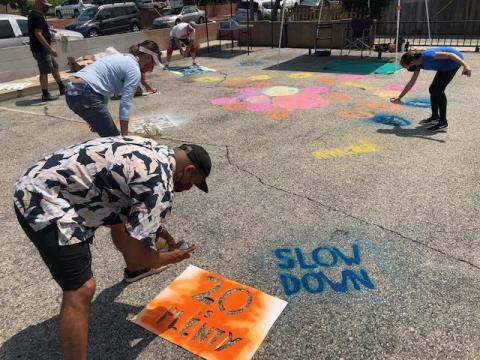
SCAG’s Go Human campaign is proud to announce that we have awarded 28 Local Community Engagement and Safety Mini-Grants (Mini-Grants) to fund projects that build street-level community resiliency and increase the safety of vulnerable street users, including those who depend on biking and walking.
|
The novel coronavirus (COVID-19) pandemic is having a devastating impact on communities across the region, the nation, and the world. As a result, jurisdictions are contending with strategies to respond to the pandemic’s impacts and envisioning long term efforts for street level planning, safety, resiliency, and recovery. Across the country, emerging practices have included repurposing street space for aid distribution, resource delivery, and temporary infrastructure for bus rapid transit (BRT), among many others.
|
Bike Safety Month has taken a new meaning under the novel coronavirus (COVID-19) pandemic. While many people stay at home and limit travel to essential services to reduce the rate of transmission, the nature of Bike Month changes. During this time, safe transportation for essential workers bicycling for their work or commuting to work is even more important, in addition to those bicycling for safe transportation and exercise, especially in light of reports of increased speeds despite reduced auto vehicle traffic.
|
At SCAG, we’ve been thinking about how community engagement is changing under the novel coronavirus (COVID-19) pandemic. While people stay at home and limit travel to essential services to reduce the rate of transmission, agencies and organizations must continue to rethink conventional in-person engagement in this landscape.
|
To prioritize public health in light of the novel coronavirus (COVID-19) outbreak, the Southern California Association of Governments (SCAG) and its partner county transportation commissions will be shifting its outreach efforts for the fifth cycle of funding for the Active Transportation Program (ATP) from in-person events to webinars. Please read below for more information about the program and contact Cory Wilkerson at wilkerson@scag.ca.gov with any inquiries.
|
To protect public health and slow the rate of transmission of the novel coronavirus (COVID-19), Go Human events taking place through April 25 will be postponed or canceled. Please check the Go Human website for more information on rescheduled events and to review resources to help your city build safer streets that promote walking, biking and community connection. We look forward to seeing you at a Go Human event again soon. Postponed
|
| |
Traffic-related fatalities and serious injuries are a critical and preventable public health and equity issue in the region. Approximately 1,500 people die, more than 5,200 are severely injured, and 136,000 are injured on roadways throughout the SCAG region every year. These numbers represent children, parents, spouses, relatives, and friends. These are people who were going about their typical day—heading to work, the grocery store, or to visit family.
|
As 2019 comes to a close, we are taking time to reflect on a banner year for Go Human! Go Human has partnered with community members, nonprofit organizations, cities and local agencies throughout the region to create safer and healthier places through education, advocacy, resource sharing and events.
|
Connect SoCal, SCAG’s 2020–2045 Regional Transportation Plan/Sustainable Communities Strategy, is a long-range plan to help guide the region’s growth, and includes transportation improvements and land use ideas to shape the future of Southern California.
|
On Friday, Nov. 22, Go Human partnered with the annual Glendora Holiday Stroll and Tree Lighting Festival to put on the Roll to the Stroll in the City of Glendora to offer community members a unique experience of Glendora Avenue. Together, the events opened up the Glendora Village between Bennett and Carroll Avenues for residents to experience street improvements that are intended to make walking and biking in the community safer and more enjoyable.
|
Meet on Beach was presented by Go Human and the SCAG in partnership with the Mobile Source Air Pollution Reduction Review Committee; and produced by Community Arts Resources; in association with the cities of La Habra, Buena Park, Anaheim, Stanton, Garden Grove, Westminster, and Huntington Beach.
|
In partnership with the Glendora Holiday Stroll and Tree Lighting Festival, join us on Glendora Avenue between Foothill Boulevard and Carroll Avenue for Roll to the Stroll to test out temporary safety improvements that help make Glendora Avenue safer and more inviting to walk and bike. Experience temporary features including a parking protected separated bike lane, curb extensions, wayfinding signage for the upcoming Gold Line station, and a parklet. We’ll be excited to hear your feedback on the potential improvements.
|